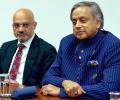
Tharoor said that though India's case might not be at the top of the agenda for the US media, India can get its message across easily.
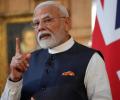
Prime Minister Narendra Modi and his British counterpart Keir Starmer discussed the need to prevent the misuse of democratic freedoms by extremist ideologies. They also addressed terrorism and trade ties.

The statement came hours after Prime Minister Narendra Modi on Tuesday told the top defence brass that the armed forces have "complete operational freedom" to decide on the mode, targets and timing of India's response to the Pahalgam terror attack, government sources said.

What was meant to be a veterans' contest has reignited a familiar debate over politics, patriotism, and the role of sport as diplomatic leverage.
The announcement on expansion of CPEC was made following a meeting among Chinese Foreign Minister Wang Yi, his Pakistani counterpart Ishaq Dar and Afghanistan's Acting Foreign Minister Amir Khan Muttaqi in Beijing, according to a Pakistani readout.
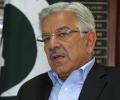
Regarding the possibility of talks, the minister said he was not aware of any such potential engagements.

Pakistan's participation in the tournament, to be held in Rajgir, Bihar is in serious doubt because of the tensions between the two countries after the Pahalgam terror attack.
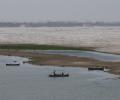
Weeks after India placed the 1960 Indus Waters Treaty (IWT) in abeyance following the April 22 Pahalgam terror attack, Pakistan has signalled its willingness to discuss New Delhi's long-standing concerns about the treaty, sources said.

Chief of Defence Staff Gen Anil Chauhan identifies China border dispute as India's biggest national security challenge, followed by Pakistan's proxy war. He also highlighted regional instability, future warfare scenarios, and dealing with nuclear-armed adversaries as major concerns.
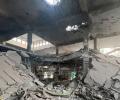
Pakistan has reiterated its desire for normal neighbourly relations with India, while also criticizing India's decision to put the Indus Waters Treaty in abeyance. The Foreign Office spokesperson emphasized Pakistan's commitment to diplomacy and regional cooperation.

External Affairs Minister S Jaishankar clarified that there was no third-party intervention in the ceasefire with Pakistan during Operation Sindoor. He asserted that halting the operation was not linked to trade and refuted claims of mediation by US President Donald Trump.
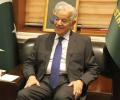
Last week, Information Minister Atta Tarar had said that 24-36 hours were important, fearing a possible strike by India. However, the time passed and there was no action by India.

'India for its survival has to change its doctrine from no first use to a pre-emptive attack in case of any hostile move by Pakistan,' recommends Colonel Anil A Athale (retd).
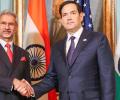
The phone conversation came amid escalating tensions between India and Pakistan over the April 22 terror attack that killed 26 civilians.
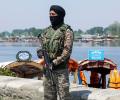
The United Nations Secretary-General, Antonio Guterres, has called for de-escalation between India and Pakistan, expressing deep concern over rising tensions following a terrorist attack in Jammu and Kashmir. Guterres reiterated his condemnation of the attack and urged both sides to avoid a confrontation, which he described as catastrophic. The Secretary-General has also offered his good offices to support de-escalation efforts. The President of the UN General Assembly, Philemon Yang, has also expressed concern over the escalating violence and called for a resolution through diplomatic means. Meanwhile, Pakistan has denied any involvement in the attack and reiterated its commitment to fighting terrorism.

Citing "cross-border linkages" to the horrific attack, India has promised severe punishment to those involved in the strike that triggered wide-spread outrage within India and abroad.

The Instagram accounts of leading current and former Pakistani cricketers were blocked in India on Friday.

India will argue for Pakistan's return to the Financial Action Task Force (FATF) grey list due to its alleged failure to combat money laundering and terror financing. The move comes after recent tensions between the two countries following a terror attack in Pahalgam, India. India believes Pakistan has not adequately addressed the issue of terrorism emanating from its territory and has diverted funds from multilateral agencies towards arms purchases.
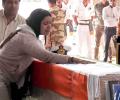
'Operation Sindoor is still ongoing. The Prime Minister himself said that blood and water cannot flow together, that talks and terrorism cannot go together. So how can we have a cricket match with a country that indulges in terrorism?'
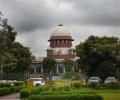
The Supreme Court has stayed the execution of an alleged Indian Mujahideen operative sentenced to death in connection with the 2013 Dilsukhnagar blasts.

So, when to start, when to stop, how much to apply in terms of time, space and resources, and how much, what is the definition of calibrated action, all these things were something "we kept discussing at every time," Gen Dwivedi recalled.

India's Air Chief Marshal A P Singh met Prime Minister Narendra Modi on Sunday to discuss the security situation arising from escalating tensions with Pakistan. The meeting comes after a similar briefing by the Navy Chief on the situation in the Arabian Sea. This follows a deadly terror attack in Pahalgam, which India has blamed on Pakistan. India has taken several retaliatory measures, including suspending the Indus Waters Treaty and banning imports from Pakistan.
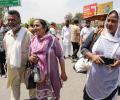
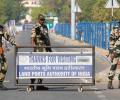
India has revoked all visas issued to Pakistani nationals effective April 27, advised Indian nationals in Pakistan to return home, and suspended visa services to Pakistani nationals. The move comes in retaliation to the Pahalgam terror attack that killed 26 people and alleged cross-border links to the attack. This escalation follows India's previous actions against Pakistan, including expelling Pakistani military attaches, suspending the Indus Water Treaty, and shutting down the Attari land-transit post.
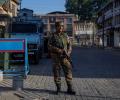
India has reached out to Denmark and other non-permanent members of the UN Security Council to apprise them of the Pahalgam terror attack and its cross-border linkages. External Affairs Minister S Jaishankar has spoken to his counterparts from several nations, conveying India's resolve to bring the perpetrators to justice. The outreach comes as India mulls options for responding to the attack, with Prime Minister Modi assuring the harshest response for the "perpetrators and conspirators." India has also received condolences and condemnations from world leaders, including US President Donald Trump and French President Emmanuel Macron.
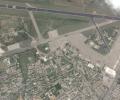
India's strikes on Pakistan damaged runways and structures across at least six airfields, according to a visual analysis by The Washington Post, which experts said were the most significant attacks of their kind in decades of simmering conflict between the two nations.
Pakistan Volleyball Federation on Sunday said India have withdrawn their contingent from the next month's Central Asian Volleyball in Islamabad.
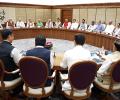
The diplomatic exercise aimed at presenting India's stance against Pakistan on terror comes in the wake of Operation Sindoor -- the Indian offensive against terror camps in Pakistan and Pakistan-occupied Kashmir following the April 22 terror attack in Pahalgam in which 26 people, mostly tourists, were killed.

'Don't make it political, let cricket be a game.'
This was Rana's last legal chance not to be extradited to India. Earlier, he lost a legal battle in several federal courts, including the US Court of Appeals for the North Circuit in San Francisco.
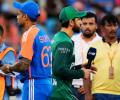
Chaudhary lauded Andy Pycroft, describing him as a seasoned ICC elite panel referee with a stellar track record and a well-known former Zimbabwean player of high repute.
Prime Minister Narendra Modi hailed "Operation Sindoor" as a turning point in the global fight against terror, describing it as a symbol of India's growing strength and clarity of purpose. Addressing the nation through his monthly radio programme Mann Ki Baat, Modi said the operation reflects a changing and resolute India, and has inspired patriotism and self-reliance across the country.

Prime Minister Narendra Modi cut short his two-day visit to Saudi Arabia and returned to New Delhi on Tuesday night following a deadly terrorist attack in Jammu and Kashmir. Modi, who held bilateral talks with Saudi Crown Prince Mohammed bin Salman in Jeddah, skipped an official dinner hosted on Tuesday to address the crisis. He was originally scheduled to return to India on Wednesday night. The attack, claimed by The Resistance Front (TRF), a proxy of the Pakistan-based Lashkar-e-Taiba (LeT) terrorist group, prompted an urgent internal meeting at the Ritz Carlton hotel in Jeddah, attended by Modi, National Security Adviser Ajit Doval, and other senior officials.
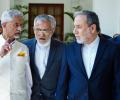
India has no intention to escalate tensions with Pakistan, but any military attacks on its soil will be met with a "very" firm response, External Affairs Minister S Jaishankar said on Thursday. Jaishankar made the remarks at a meeting with Iranian Foreign Minister Abbas Araghchi, emphasizing that the "barbaric" Pahalgam terror attack compelled India to carry out strikes on "cross-border" terror infrastructure on Wednesday. He reiterated that India's response was targeted and measured, but stressed that any further military attacks would be met with a firm response. The Iranian foreign minister, who landed in New Delhi amidst escalating tensions between India and Pakistan, called for de-escalation of the situation and stressed the need for regional cooperation to eradicate terrorism. The meeting also focused on boosting ties in areas of trade and investment, including the Chabahar port project.

India stressed that it is even more extraordinary for a country with a history of rigged elections to talk about political choices, that too in a democracy.
Following the deadly Pahalgam attack, Michael Rubin, a former Pentagon official and senior fellow at the American Enterprise Institute, issued a strong statement and said that 'it is now the duty of India to do to Pakistan and to Pakistan's Inter-Services Intelligence (ISI) what Israel did to Hamas', calling for decisive action against Pakistan's intelligence agency for its alleged role in supporting terrorism.
Chief of Defence Staff General Anil Chauhan says the Indian Air Force would have slowed the Chinese offensive considerably during the 1962 War.
The terrorists chose Baisaran as the target due to its "high tourist presence", "relative isolation" and after considering that the "response (from the security agencies) would take time".
Pakistan on Tuesday increased its defence budget by 20 per cent, allocating PRs. 2,550 billion ($9 billion) for the fiscal year 2025-26, amid tensions with India.

'Bollywood now pushing propaganda with #TheTajStory a film twisting history by showing the Taj Mahal as a temple. A country boasting of being the 4th largest economy is drowning in fantasy & communal myths. When propaganda feels ashamed, you know it's India 2025'

The Indian government has revoked 14 categories of visas for Pakistani nationals, including business, conference, visitor, and pilgrim visas, following the terror attack in Pahalgam, Jammu and Kashmir. The decision was made after a Cabinet Committee on Security meeting, and the Home Minister has instructed state governments to ensure that all Pakistani nationals leave India by the set deadlines. The order does not apply to Long Term Visas (LTVs) and diplomatic and official visas issued to Pakistani nationals.
